Microwave Lineart: A Practical Designer’s Review
First Impressions: Clean, Clever, and Kitchen-Ready
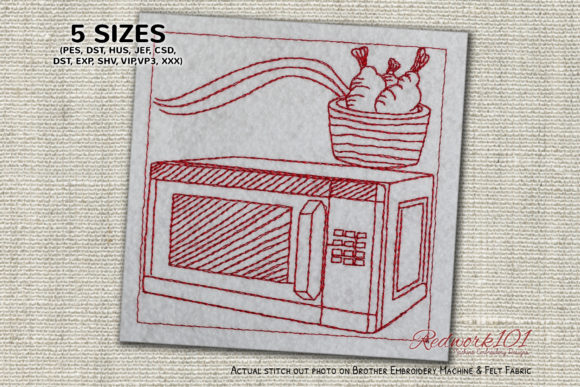
When I opened Microwave Lineart for the first time, I didn’t see just a kitchen motif—I saw intention. It’s minimalist but not sterile; playful but not childish. The lineart style gives it flexibility across fabric types and product categories, while the microwave shape grounds it firmly in functional, everyday life. There’s no clutter—no unnecessary shading, no overwrought details—just confident outlines and smart negative space. That simplicity is its biggest strength, especially if you’re stitching on textured tea towels, structured aprons, or lightweight baby onesies.
A Real Project Test: Embroidering a Linen Kitchen Towel
Last week, I used Microwave Lineart on a set of 100% linen kitchen towels for a small-batch boutique launch. I chose a medium-weight cutaway stabilizer and tested three thread colors: charcoal grey (for contrast on cream), soft sage (to lean into the “kitchen garden” vibe), and white (on dark indigo towels). The design stitched cleanly at 3.8" wide—well within standard 4x4 hoops—and the satin stitch along the door outline held crisp definition without pulling. No puckering, no skipped stitches. What stood out most? How quickly customers recognized it—not as generic “appliance art,” but as *that friendly, slightly nostalgic microwave* you’d actually want on your counter. That kind of instant readability matters when you’re selling handmade products online or at craft fairs.
Where Microwave Lineart Shines (and Where to Pause)
This machine embroidery design excels on stable, medium-weight fabrics: cotton canvas for tote bags, twill for aprons, fleece-backed sweatshirts, and even lightweight denim for caps. Its open layout means it breathes well on layered garments and holds up beautifully after repeated washing—critical for kitchen towels, baby bibs, or personalized gifts meant to last.
That said, tread thoughtfully on:
- Stretchy fabrics like jersey or ribbed knits—lineart relies on clean edges, and stretch can blur those lines without proper stabilization and hooping technique;
- Very thin fabrics like voile or silk—test stitch density first; too much fill stitch (if added later) could overwhelm the base;
- Curved surfaces like baseball caps—the top arc of the microwave may require repositioning or slight digitizing tweaks for optimal drape;
- Dark or heavily textured backgrounds—the outer Box (as noted in the description) is optional and often in a contrasting color. If you skip it, ensure your main lineart has enough weight to read clearly.
Design Flexibility for Real Business Needs
Microwave Lineart isn’t just a novelty—it’s a versatile design asset. As an Etsy seller, I’ve used it in three distinct ways: as a standalone embroidered patch (heat-applied to denim jackets), as part of a coordinated kitchen-themed collection (paired with coffee cup and oven mitt lineart), and as subtle branding on custom aprons for a local café. Its neutral tone makes it easy to match brand palettes, and because it’s lineart—not dense fill—it scales down smoothly for baby embroidery on burp cloths or up cleanly for large pillow covers.
For commercial embroidery shops, this file works reliably across machines—no excessive jump stitches, no nested trims, and minimal color changes unless you choose to add the optional outer Box. That translates to faster setup, fewer thread breaks, and consistent output across orders.
What It Adds to Your Finished Product
Let’s be honest: not every embroidery file elevates the perception of your handmade product. Microwave Lineart does. It signals attention to detail—not just in execution, but in concept. Customers notice that. On a personalized gift (“Happy Birthday, Mom!” + Microwave Lineart on a tea towel), it adds warmth and specificity. On a small shop product, it reinforces authenticity and craft intention. And for digital product sellers, it’s a smart addition to a themed bundle—kitchen lineart sets sell consistently year-round, especially around holidays and housewarming seasons.
Practical Designer Notes Before You Stitch
Before committing to a full run, here’s what I always do with Microwave Lineart:
- Run a test on scrap fabric matching your final substrate—especially if using textured linen or terry cloth;
- Check thread color contrast on both light and dark mockups (a printable mockup helps visualize this fast);
- Review stitch density: lineart should feel airy, not heavy—avoid adding unnecessary fill unless part of your creative direction;
- Confirm hoop size compatibility—if you’re working with smaller hoops (like 3x3), verify the design fits comfortably with margin room;
- Inspect corners and curves: the rounded door handle and control panel details must land cleanly—zoom in on your embroidery software;
- Use appropriate stabilizer—cutaway for stretchy or unstable fabrics, tear-away for stable cottons;
- Double-check licensing terms before selling finished items or bundling the digital embroidery file—this is non-negotiable for Etsy sellers and craft businesses;
- Try stitching it in black and white first—this reveals clarity issues no color preview can hide.
Final Thought: A Quietly Confident Design Choice
Microwave Lineart won’t shout—but it doesn’t need to. In a market saturated with busy, over-digitized motifs, its restraint is refreshing. It supports the product instead of competing with it. Whether you’re embroidering a holiday gift, updating your craft business inventory, or building a cohesive kitchen-themed collection, this embroidery file delivers reliability, recognition, and quiet professionalism. It’s the kind of design that makes customers pause, smile, and say, “Yes—that’s exactly what I pictured.” And in handmade and small-shop work, that moment of alignment is everything.